Most roof repairs in Cambridge cost between £150 and £900 depending on the problem, the height and pitch of your roof, and how much access is needed. This guide gives real 2026 Cambridge prices for the repairs we're called out to most often.
Tell us the job in 30 seconds. No pushy sales, no call-out fee.
📞 Call Now: 0122 366 6465Roof repairs in Cambridge cost £150–£900 in 2026. A few slipped tiles start around £150, chimney flashing repairs £250–£600, and larger structural repairs £600–£900+. There is no call-out fee — you only pay for work done. Access, height and materials affect the price. Call 0122 366 6465 for a free assessment.
The price of a roof repair depends less on the fault itself and more on getting safely to it. A single slipped tile is a quick fix — unless it is three storeys up on a steep Victorian terrace with no rear access.
Straightforward repairs — replacing a handful of slipped or cracked tiles, refixing a ridge tile, sealing a small flashing gap — are quick and inexpensive, usually £150–£350. More involved work such as re-leading a chimney, rebuilding a section of ridge, or tracing and fixing a persistent leak costs more because it takes longer and uses more material.
Leaks are the hardest to price blind, because the entry point is often metres from where water appears inside. We trace the true source before quoting.
A bungalow repair reached from a ladder is far cheaper than the same repair on a three-storey townhouse needing a scaffold tower or roof access equipment. Cambridge's tall Victorian terraces off Mill Road and in Petersfield frequently need proper access provision, which is the main reason two seemingly identical repairs can differ in price.
Where a repair can only be reached over a neighbour's property or a narrow shared alley, the extra time is reflected in the quote.
Matching materials adds cost. Reclaimed Welsh slate for a Victorian terrace costs more than a stock concrete tile, and correct-code lead for a chimney flashing is dearer than a quick sealant patch — but it lasts decades rather than months.
We always price the repair that lasts, not the cheapest patch that fails within a year.
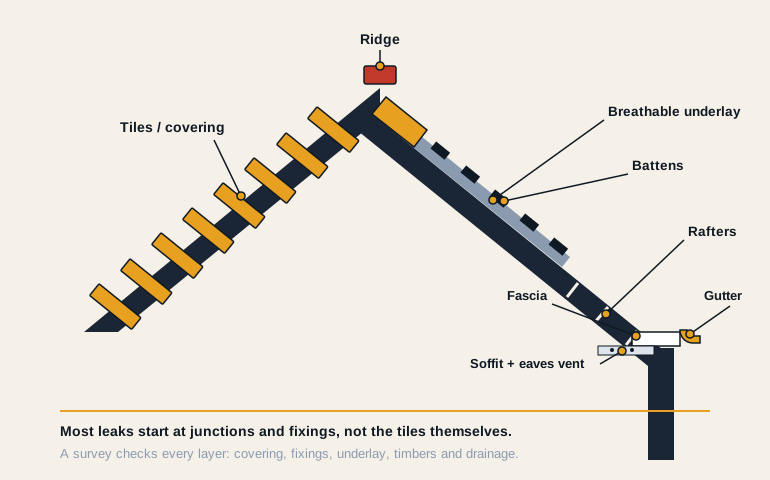
The repair we are called out to most across Cambridge is slipped tiles caused by nail sickness on the 1960s–70s estates. On the concrete-tile roofs of Arbury, King's Hedges and Cherry Hinton, the original galvanised nails corrode and tiles begin to slip. Refixing a small area of slipped tiles typically costs £150–£350; but where slipping is widespread across the whole roof, it is a sign the roof is nearing the point where a re-roof is more economical than repeated repairs.
On the Victorian terraces of Romsey Town and Petersfield, the common calls are slipped Welsh slate and failed lead valleys. Individual slate replacement using tingles costs £150–£300; re-leading a valley is a bigger job at £400–£800 depending on length and access.
Chimney-related leaks are frequent across Cambridge's older stock. A failed lead flashing around a chimney on a Chesterton or Newnham property usually costs £250–£600 to put right, depending on stack size and access. Left unrepaired, the same fault causes damp on the chimney breast that costs far more to remedy.
As a worked example: a slipped-tile repair to a small section of a 1960s semi roof on the King's Hedges estate, reached with a ladder and refixed with stainless steel clips, typically costs £180–£250. The same fault on a three-storey Mill Road terrace, needing scaffold access, would be £350–£500 for identical work — access is the difference.
A repair is the right answer when the roof is fundamentally sound and the fault is localised — a slipped tile, a cracked ridge, a single failed flashing. In those cases repair is far cheaper than replacement and buys many more years from the roof. The tipping point comes when faults stop being localised and start appearing across the whole roof at once.
The clearest example in Cambridge is nail sickness on the concrete-tile estates. When the galvanised nails that hold the tiles begin to corrode, tiles slip not in one spot but everywhere, because every nail is the same age and failing together. Patching one area simply moves the problem along; within months another area slips. At that stage, repeated repairs become a false economy and a full re-roof with modern stainless fixings is the better value.
As a rule of thumb, if under 20% of the roof has failed, repair. Once 30–40% of tiles are slipping or the underlying felt is breaking down, the sums favour replacement. We give an honest assessment at survey — we would rather tell you a roof has years left than sell an unnecessary re-roof, because our reputation across Cambridge depends on straight answers.
Some roof problems can't wait for a scheduled visit — a tile off in a storm letting water into a bedroom, a slipped slate hanging over a pavement, or a sudden leak after heavy rain. For these we offer emergency call-outs across Cambridge, aiming to be on site within a couple of hours to make the roof safe and stop water entering.
Emergency make-safe work — sheeting over a breach, removing a dangerous tile, clearing a blocked outlet — typically costs £150–£300, with no call-out fee. Once the immediate danger is dealt with, we quote for the permanent repair separately so you are never pressured into a rushed decision on the larger fix. This two-stage approach protects both your property and your budget.
The NFRC recommends that roofs are inspected at least once a year and after major storms, because a minor defect such as a single slipped tile, caught early, prevents the water ingress that causes the majority of expensive structural roof repairs.
Source: NFRC maintenance guidance
Not sure what's wrong with your roof? We'll take a look for free.
Call 0122 366 6465"Fixed a leak two other roofers couldn't trace on our Petersfield terrace. Fair price, no call-out charge."
"Slipped tiles on our King's Hedges semi sorted in an afternoon. Exactly what they quoted."
"Re-leaded the chimney flashing on our Chesterton house properly. No more damp on the wall."
Most roof problems announce themselves indoors before they are visible outside. If you have any of the signs below, a repair is usually the answer — but not always.
When it is not the answer: If more than a third of the covering has failed, or tiles are slipping right across the roof from nail sickness, repairing tile-by-tile is money wasted — a re-roof is the better value. Read the full guide.
Most Cambridge repairs run from towers or roof ladders; a full scaffold is quoted only where the job needs safe standing time at height. Scaffold is specified for: chimney-side repairs, full valley rebuilds, and anything beyond a day at height on a two- or three-storey terrace - always itemised in your written quote, never a hidden extra, and we arrange it.
Victorian terraces around Romsey Town and Petersfield mean rear access is tight and pavement scaffold often needs permit-controlled space. Pavement scaffold and skip permits go through Cambridge City Council; allow a few working days on streets like Mill Road, Gwydir Street, the terraces off Petersfield where space is tight.
Workmanship on the repaired section is covered for 10 years in writing; any replacement tiles or lead carry their manufacturer warranties on top.
If a fault appears in covered work, we come back and put it right. No quibbling, no re-charge.
The NFRC recommends roofs are inspected at least once a year and after major storms, because a minor defect caught early — a single slipped tile — prevents the water ingress behind most expensive structural roof repairs.
Source: NFRC maintenance guidance
Most roof repairs in Cambridge cost £150–£900 in 2026. Slipped tiles start around £150, chimney flashing £250–£600, and larger repairs £600–£900+, depending on access and materials.
No. We do not charge a call-out fee for roof repairs in Cambridge. You only pay for the work carried out, quoted before we start.
A repair reached by ladder is far cheaper than one needing scaffold on a tall Victorian terrace. Access and height are often the biggest factor in the final price.
If under 20% of the roof has failed, repair is cheaper. Once nail sickness affects 30–40% of tiles, a full re-roof usually costs less than repeated repairs.
A chimney flashing repair in Cambridge typically costs £250–£600, depending on stack size, lead code and access. It prevents damp entering the chimney breast.
Yes. We trace leaks to their true source before repairing, since the entry point is often well away from where water appears inside. Leak tracing and repair costs £200–£600.
For urgent repairs across Cambridge we usually attend within 24–48 hours, and same day for emergencies. We keep the roof weathertight until a permanent fix.
A quality repair to an otherwise sound roof lasts for years. Widespread slipping across the whole roof, though, signals nail sickness — a case where a re-roof is the better value.
Yes. Every roof repair we carry out across Cambridge is backed by our workmanship guarantee. We use matching materials and correct-code lead so the repair lasts rather than failing within a season.
Yes. Most Cambridge roof repairs continue year-round. We schedule around severe weather and can carry out emergency make-safe work at any time to stop water entering your home.
Not always. Many Cambridge repairs are reached safely by ladder or tower. Taller Victorian terraces may need a scaffold, which we include transparently in the quote where required.
Free surveys and written quotes across Cambridge and Cambridgeshire. No obligation, no pressure — just honest advice from a local roofer.
0122 366 6465