A new roof in Cambridge typically costs between £4,000 and £15,000 depending on your property's size, roof shape, chosen materials and access. This guide breaks down real 2026 Cambridge prices by house type and explains exactly what drives the figure up or down.
Tell us the job in 30 seconds. No pushy sales, no call-out fee.
📞 Call Now: 0122 366 6465A new roof in Cambridge costs £4,000–£15,000 in 2026. A terraced re-roof starts around £4,500, a semi runs £5,500–£9,000, and a detached property reaches £8,000–£15,000. Scaffolding, breathable membrane, stainless fixings and VAT are included. Conservation-area work adds 20–40%. Call 0122 366 6465 for a fixed survey-based quote.
Four factors move the price of a Cambridge re-roof more than anything else: property size, roof complexity, material choice and access. Understanding each helps you read a quote and spot where the money goes.
The single biggest driver is roof area, measured in square metres of actual roof surface rather than floor area. A mid-terrace in Romsey Town might have 60–80m² of roof, a typical Arbury semi 90–120m², and a detached house in Trumpington or Newnham 150m²+. Because labour and materials scale with area, a detached roof can cost three times a terrace even with identical tiles.
Roof pitch matters too. A steeper roof has more surface area than its footprint suggests and needs more scaffolding and safety provision, both of which add to the figure.
A simple front-and-back gable roof is the cheapest to re-cover. Every hip, valley, dormer and chimney adds labour and lead detailing. The Edwardian villas around Newnham and the Victorian terraces off Mill Road often have complex roofs with multiple valleys and elaborate ridge lines, which increases both time and cost.
Any leadwork — valley linings, chimney flashings, secret gutters — is skilled hand work that adds to the total but is essential for a roof that lasts.
Concrete interlocking tiles are the most economical, from around £4,500 on a terrace. Clay plain tiles and pantiles cost more. Natural Welsh slate, required on many Cambridge Victorian terraces and in conservation areas, is the most expensive at £180–£280 per square metre installed.
The breathable membrane, batten grade, and whether you upgrade to dry-fix ridge and verge systems all affect the final price — though these upgrades reduce future maintenance.
A detached house with clear driveway access is straightforward to scaffold. A mid-terrace on a narrow Cambridge street with no parking, restricted rear access and a shared party wall is more complex and costly to work on.
Central Cambridge streets around Petersfield and Romsey Town frequently need a parking suspension or skip permit from Cambridge City Council, which adds a modest but real cost to the job.
Cambridge's housing stock spans four broad eras, and each carries a different re-roofing cost. The Victorian terraces of Romsey Town, Petersfield and the Mill Road corridor were built with Welsh slate. Re-slating these properties in matching natural slate is at the top of the price range — expect £9,000–£14,000 for a typical terrace — because the material itself is costly and conservation-area rules often prevent cheaper substitutes.
The interwar and 1930s semis in areas like Cherry Hinton and parts of Chesterton generally carry clay or early concrete tiles. Re-roofing these in modern concrete interlocking tiles is more affordable, typically £6,000–£9,000 for a semi, and the simpler roof shapes keep labour down.
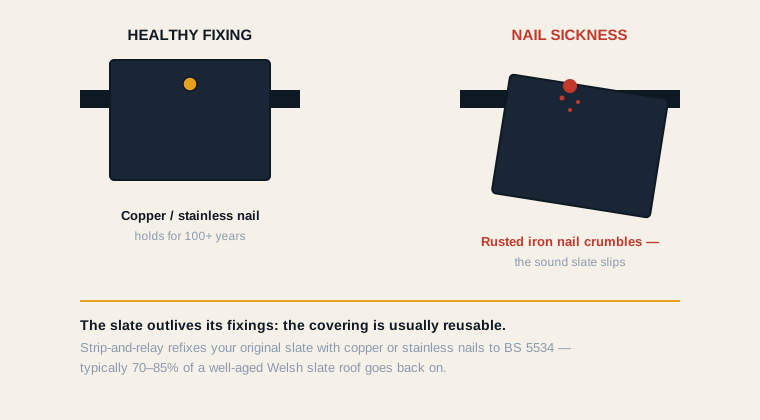
The post-war and 1960s–70s estates at Arbury and King's Hedges are where we see the most re-roofing demand in Cambridge, driven by nail sickness as the original galvanised fixings corrode. A concrete-tile re-roof on one of these semis runs £5,500–£8,000, and because the estates share common house types we can often quote quickly and accurately.
As a worked example: a three-bedroom 1960s semi on the Arbury estate, roughly 100m² of roof area, in concrete interlocking tiles with a new breathable membrane, dry-fix ridge, replacement lead to the chimney and full scaffolding, typically comes in around £6,500–£7,500 including VAT. Swap the concrete for matching clay and the same roof moves toward £9,000.
Choosing a roofing material is a balance of cost, lifespan and what suits your property and its location within Cambridge. Concrete interlocking tiles are the workhorse of the Cambridge suburbs — affordable, durable and available in profiles that echo clay or slate. They are the natural choice for the 1960s–70s estates and most post-war housing, lasting 40–60 years and keeping the re-roof cost at the lower end.
Clay tiles, whether plain tiles or pantiles, are a step up in both cost and character. They hold their colour for the life of the roof rather than fading like concrete, and suit the interwar and Edwardian properties across Cambridge where appearance matters. Expect to pay noticeably more than concrete, but with a longer effective lifespan and better looks.
Natural Welsh slate sits at the top. It is the correct — and often mandatory — material for the Victorian terraces of Romsey Town, Petersfield and the Mill Road area, and for properties in Cambridge's conservation areas. Slate can last well over a century, so while the upfront cost of £180–£280 per square metre is high, the whole-life cost can be competitive because you are unlikely to ever re-roof again.
For most Cambridge homeowners the decision is made partly by the house and partly by planning rules. In a conservation area or on a listed building, the local authority may require you to match the existing material, which removes the cheaper options from the table. Outside those areas, concrete tile offers the best value for a like-for-like replacement.
There is rarely a single day a roof 'expires'. Instead, the signs accumulate: repeated slipped tiles across the whole roof rather than one area, daylight visible through the roof boards from the loft, damp patches on upstairs ceilings, and a spike in repair calls. When the cost of repeated repairs in a year approaches a fifth of the re-roof price, replacement becomes the sensible economic choice.
The re-roofing process itself is more orderly than most homeowners expect. We erect scaffolding, then strip the old covering and dispose of it. The roof structure and timbers are inspected and any defects made good. A breathable membrane and new treated battens go on, followed by the new tiles or slates, ridge, and all lead detailing. The site is cleaned daily and left weathertight each night.
A typical Cambridge semi takes three to five working days; a large detached house or a complex slate roof longer. We work around Cambridge's weather and keep you informed of progress. On completion you receive a written 10-year workmanship guarantee alongside the manufacturer warranties for the materials used.
Planning permission is not normally needed for a like-for-like re-roof, but conservation areas and listed buildings are the exception — there, consent or listed building consent may be required before work begins. We advise on this during the survey so there are no surprises, and we liaise with the conservation team where needed.
The National Federation of Roofing Contractors (NFRC) notes that concrete and clay tiles installed to BS 5534 should achieve a service life of 40–60 years, meaning a properly specified new roof is a once-in-a-generation investment rather than a recurring cost.
Source: NFRC guidance / BS 5534:2014+A2:2018
Want an accurate new roof price for your Cambridge home?
Call 0122 366 6465"They re-roofed our 1930s semi in Cherry Hinton for exactly the quoted price — no surprises, scaffolding and all included."
"Got three quotes for a full re-roof in Romsey Town. Theirs was clear, itemised and matched the slate perfectly."
"Explained every line of the cost for our Arbury re-roof. Fair price and finished ahead of schedule."
A full re-roof is a major investment, so it is worth being sure you need one. These are the signs a roof is genuinely at the end of its life rather than just needing a repair.
When it is not the answer: If the covering is sound and only a localised area has failed, a targeted repair is far cheaper and buys many more years — do not let anyone sell you a re-roof you do not need. Read the full guide.
A full re-roof always needs scaffolding on at least two elevations; we arrange and itemise it, never bundling it invisibly into the headline rate. Scaffold is specified for: every re-roof — the only question is how many elevations and whether a loading bay is needed - always itemised in your written quote, never a hidden extra, and we arrange it.
Victorian terraces around Romsey Town and Petersfield mean rear access is tight and pavement scaffold often needs permit-controlled space. Pavement scaffold and skip permits go through Cambridge City Council; allow a few working days on streets like Mill Road, Gwydir Street, the terraces off Petersfield where space is tight.
The complete re-roof carries a 10-year workmanship guarantee in writing, transferable if you sell, with manufacturer warranties on the tiles and membrane on top.
If a fault appears in covered work, we come back and put it right. No quibbling, no re-charge.
The NFRC notes that concrete and clay tiles installed to BS 5534 should achieve a 40–60 year service life, meaning a properly specified re-roof is a once-in-a-generation investment rather than a recurring cost.
Source: NFRC guidance / BS 5534:2014+A2:2018
A new roof in Cambridge costs £4,000–£15,000 in 2026. A terrace starts around £4,500, a semi £5,500–£9,000, and a detached property £8,000–£15,000, depending on materials and access.
Natural Welsh slate costs £180–£280 per square metre installed — far more than concrete tile. Many Cambridge Victorian terraces and conservation areas require matching slate, which raises the price.
Yes. Conservation-area rules often require matching natural materials and add planning constraints, typically increasing the cost by 20–40% over a standard concrete-tile re-roof.
Yes. All our Cambridge re-roofing quotes include scaffolding erection and removal, along with membrane, fixings and VAT. Nothing is added as a surprise later.
A typical Cambridge semi re-roof takes 3–5 working days. Larger or complex roofs take longer. We keep the property weathertight at the end of each day.
No. We provide free, no-obligation written quotes across Cambridge after an in-person survey of your roof and loft space.
Roof area is the biggest driver, followed by complexity (valleys, dormers, chimneys), material choice, and access. Natural slate and conservation requirements push prices to the top of the range.
We provide detailed fixed quotes so you can budget accurately. Many Cambridge homeowners phase larger projects — we can advise on what is safe to defer after a survey.
Yes. A modern re-roof is the ideal time to upgrade loft insulation and fit a breathable membrane, reducing heat loss through the roof. Many older Cambridge homes gain noticeably lower heating bills after a properly specified new roof.
Yes. Stripping the old covering, disposing of all waste responsibly, and leaving the site clean are all included in our Cambridge re-roofing quotes. There are no hidden disposal or skip charges added later.
Free surveys and written quotes across Cambridge and Cambridgeshire. No obligation, no pressure — just honest advice from a local roofer.
0122 366 6465