If the mortar on your gable ends or ridge is cracking and letting tiles work loose, a dry verge or dry ridge system is the permanent fix. We mechanically fix your verges and ridges to BS 8612 across Cambridge — no more mortar to fail, and far better resistance to the wind that funnels across the city's exposed estates.
Tell us the job in 30 seconds. No pushy sales, no call-out fee.
📞 Call Now: 0122 366 6465Dry verge systems in Cambridge mechanically fix gable-end tiles with clips instead of mortar, ending the cracking and tile loss that affects the city's post-war estates. Dry ridge does the same for the ridge line. Both meet BS 8612, need no maintenance, and resist wind far better than mortar. From £250 per gable. Call 0122 366 6465.
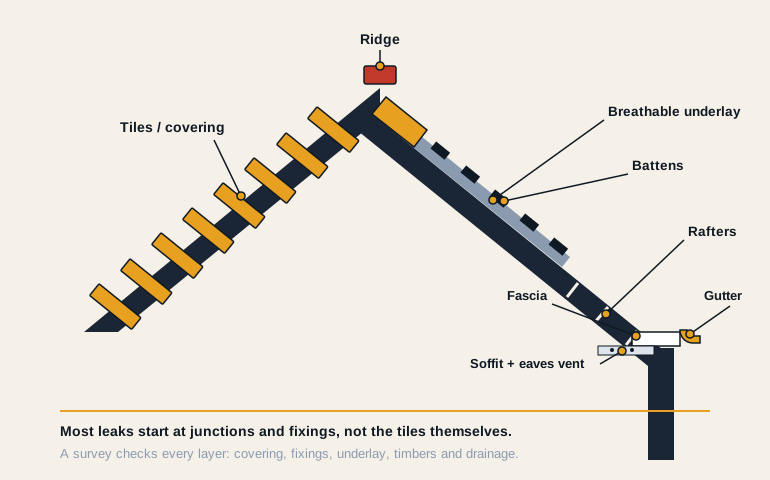
Traditional roofs bed the verge (the tiles at the gable end) and the ridge (the tiles along the top) in mortar. Mortar cracks and fails with age and weather. Dry systems replace it with mechanical fixings that never need re-pointing.
The verge is the edge of the roof at the gable end, and traditionally the tiles here are bedded in mortar to hold them down and keep water and wind out. Over the years that mortar cracks, crumbles and falls away, leaving the end tiles loose and vulnerable to lifting in the wind. A dry verge system replaces the mortar with interlocking uPVC or aluminium caps that clip mechanically over each tile end.
The result is a clean, secure gable edge that never needs re-pointing, resists wind uplift far better than mortar, and keeps birds and driving rain out of the roof edge. It is the permanent answer to the recurring mortar failure that plagues the verges of Cambridge's post-war housing.
The ridge runs along the very top of the roof, and its tiles are traditionally bedded in mortar too. Ridge mortar is highly exposed and among the first things to fail, which is why loose and slipped ridge tiles are such a common — and dangerous — problem. A dry ridge system fixes each ridge tile mechanically with screws and clips onto a roll of ventilating ridge material.
As well as being maintenance-free and far more secure in wind, dry ridge adds ventilation along the ridge line, helping to prevent the roof-space condensation that affects many older Cambridge homes.
The classic signs are cracked or missing mortar at the gable and ridge, mortar debris in the gutter or on the ground, and end or ridge tiles that have slipped or lifted. Once ridge or verge mortar begins failing across a roof, patch-repointing is a short-term fix at best — the rest of the mortar is the same age and will follow.
Converting to a dry system when the mortar fails, rather than repeatedly re-pointing, is both cheaper over time and far more secure — particularly on Cambridge's wind-exposed estates.
Dry verge and dry ridge are not just convenient alternatives to mortar — they are now the standard the industry works to. When BS 5534, the British Standard for slating and tiling, was revised in 2014, it effectively ended reliance on mortar alone to hold down ridge and verge tiles, requiring mechanical fixing. BS 8612, introduced in 2018, is the dedicated British Standard for dry-fixed ridge, hip and verge systems, setting out the performance requirements these products must meet.
What this means in practice is that a modern roof, and any roof being re-verged or re-ridged today, should use a mechanically fixed system meeting BS 8612 rather than relying on mortar that the standards no longer consider adequate on its own. We fit BS 8612-compliant systems as standard, so your verge and ridge meet current requirements and carry the wind resistance the standard demands.
Wind resistance matters especially in Cambridge. The city sits in a low, open, exposed position on the edge of the Fens, with little high ground or woodland to slow the wind. On the open post-war estates, gable ends and ridges take the full force of gusts that funnel across unobstructed. Mortar bedding, once cracked, offers little resistance and tiles lift; a mechanically fixed BS 8612 system holds firm. For Cambridge's exposed housing, dry systems are not just tidier — they are genuinely more secure.
Dry verge and dry ridge demand is concentrated in Cambridge's large post-war and 1960s–80s estates, where concrete interlocking tiles were laid with mortar-bedded verges and ridges that are now, decades on, failing en masse. The estates of Arbury and King's Hedges to the north of the city, and Cherry Hinton to the south-east, are exactly the housing where we are most often called to replace crumbling mortar with a permanent dry system.
These estates share a common problem beyond just age. The same nail sickness that causes slipped tiles on their roofs goes hand in hand with mortar failure at the verges and ridges — the whole roof was built at once, so the whole roof reaches the end of its mortar life together. Homeowners here often convert the verge and ridge to a dry system at the same time as addressing slipped tiles, solving both the mortar and the fixing problems in one visit.
Cambridge's exposed position makes the case stronger still on these estates. The open layouts of Arbury and King's Hedges, with their long terraces and gable ends facing open ground, funnel wind against exactly the verges and ridges where the mortar has failed. A dry verge system on these gables ends the cycle of lifting tiles and repeated repairs.
As a worked example: converting both gable verges on a typical 1970s semi on the King's Hedges estate to a dry verge system, replacing the failed mortar with mechanically clipped caps, typically costs £500–£900 for the pair — a one-off job that removes the recurring cost and risk of re-pointing crumbling mortar every few years.
BS 8612, the British Standard for dry-fixed ridge, hip and verge systems, was introduced in 2018 following the 2014 revision of BS 5534 which ended reliance on mortar alone — meaning mechanically fixed verges and ridges are now the standard, not an upgrade.
Source: BS 8612:2018 / BS 5534:2014
Cracked verge or ridge mortar losing tiles? Switch to a dry system.
Call 0122 366 6465"Dry verge on both gables of our King's Hedges semi — no more mortar falling in the garden and rock solid in the wind."
"Fitted a dry ridge on our Arbury bungalow when the old mortar went. Maintenance-free and better ventilated now."
"Sorted the loose ridge tiles on our Cherry Hinton house with a proper dry ridge system. Should have done it years ago."
Most roof problems announce themselves indoors before they are visible outside. If you have any of the signs below, a repair is usually the answer — but not always.
When it is not the answer: If more than a third of the covering has failed, or tiles are slipping right across the roof from nail sickness, repairing tile-by-tile is money wasted — a re-roof is the better value. Read the full guide.
Most Cambridge repairs run from towers or roof ladders; a full scaffold is quoted only where the job needs safe standing time at height. Scaffold is specified for: chimney-side repairs, full valley rebuilds, and anything beyond a day at height on a two- or three-storey terrace - always itemised in your written quote, never a hidden extra, and we arrange it.
Victorian terraces around Romsey Town and Petersfield mean rear access is tight and pavement scaffold often needs permit-controlled space. Pavement scaffold and skip permits go through Cambridge City Council; allow a few working days on streets like Mill Road, Gwydir Street, the terraces off Petersfield where space is tight.
Workmanship on the repaired section is covered for 10 years in writing; any replacement tiles or lead carry their manufacturer warranties on top.
If a fault appears in covered work, we come back and put it right. No quibbling, no re-charge.
The NFRC recommends roofs are inspected at least once a year and after major storms, because a minor defect caught early — a single slipped tile — prevents the water ingress behind most expensive structural roof repairs.
Source: NFRC maintenance guidance
Dry verge in Cambridge costs £250–£600 per gable, or £500–£900 for both gables on a semi. A full dry ridge system runs £400–£900 depending on roof size and access.
A dry verge system replaces the mortar bedding at the gable end with interlocking uPVC or aluminium caps that clip mechanically over each tile end — secure, maintenance-free and wind-resistant.
Mortar cracks and crumbles with age and weather, and Cambridge's exposed Fen-edge position drives wind hard against gable ends. Once it starts failing across a roof, patch-repointing is only a short-term fix.
Yes. On Cambridge's wind-exposed estates a mechanically fixed dry verge resists wind uplift far better than mortar, needs no maintenance, and meets the current BS 8612 standard.
BS 8612 is the British Standard for dry-fixed ridge, hip and verge systems, introduced in 2018. It sets the performance requirements these products must meet, and we fit compliant systems as standard.
The post-war and 1960s–80s estates of Arbury, King's Hedges and Cherry Hinton, where mortar-bedded concrete-tile verges and ridges are now failing en masse, see the most demand.
Yes. Many Cambridge homeowners convert both verge and ridge to dry systems at once, often alongside addressing slipped tiles, solving the mortar and fixing problems in a single visit.
Yes. A dry ridge system fixes each tile mechanically onto a ventilating ridge roll, adding ventilation along the ridge line and helping prevent the roof-space condensation common in older Cambridge homes.
Free surveys and written quotes across Cambridge and Cambridgeshire. No obligation, no pressure — just honest advice from a local roofer.
0122 366 6465